
Heavy industrial mortgages.
Plants, processing, and purpose-built facilities — the buildings generic lenders can't price, financed by the ones who can. BC and Alberta.
Heavy industrial is where commercial lending's polite fictions break down: the building that cost $8 million to fit out appraises like the shell it sits in, the environmental review runs the timeline, and the branch lender quietly wonders who'd ever buy a plating plant. None of that makes these buildings unfinanceable — it makes them placement files. The owner-occupied lane values your operation instead of the comparables, the right regional lenders actually understand process real estate, and the environmental story, led properly, closes instead of kills.
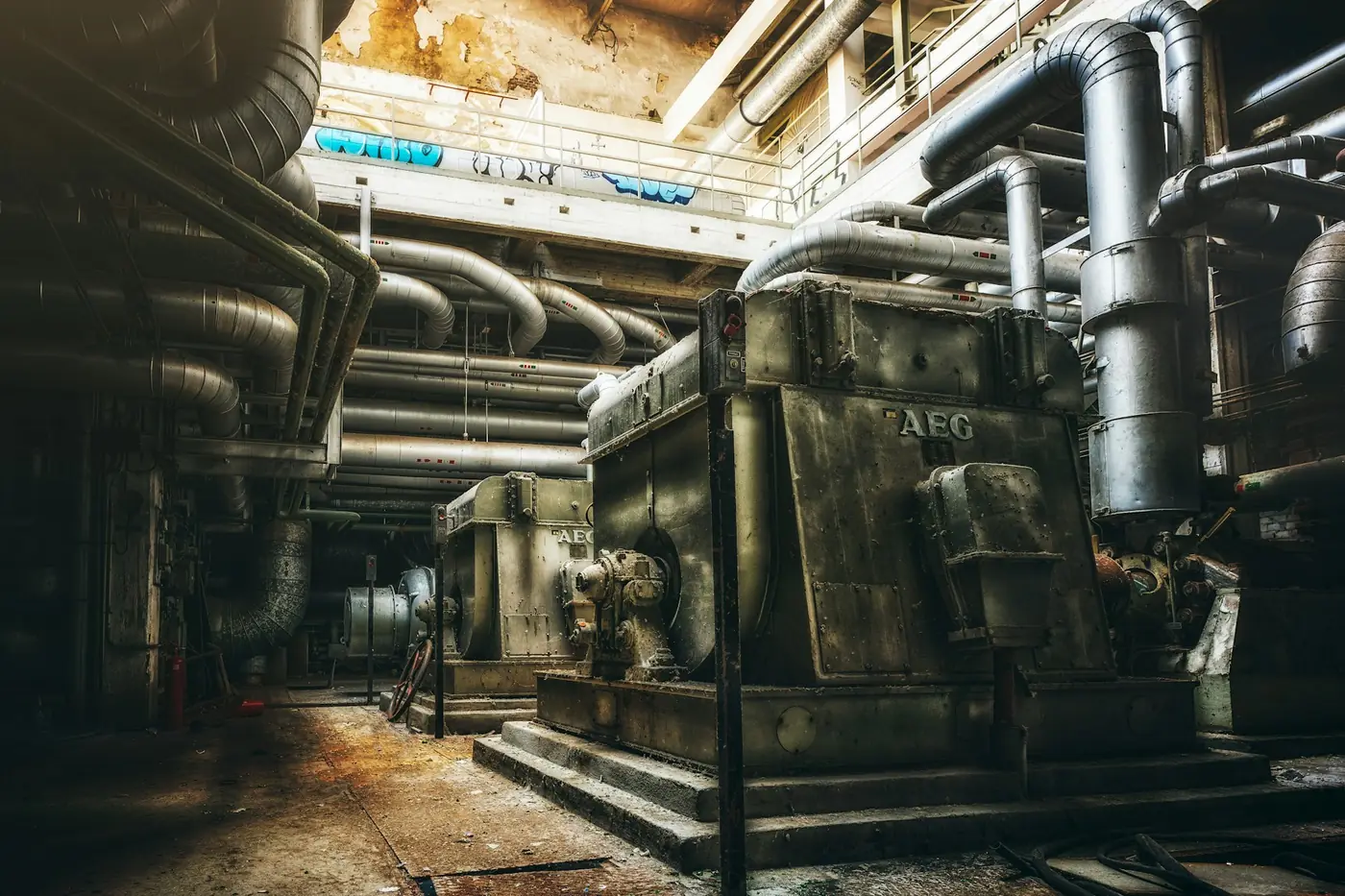
The buildings with something inside.
Production facilities with the heavy power, floor loading, and process fit-out generic appraisals discount.
Processing lines, coolers and freezers, wash-down and food-grade environments.
Overhead cranes, high clear heights, and the fabrication work that needs them.
Buildings whose electrical service is the asset — and invisible to a standard valuation.
Spur-served plants, transload sites, and logistics assets with infrastructure most lenders can't price.
Plating, coating, chemical and waste-handling operations — underwritten with the environmental story led, not hidden.
Warehouses, flex space, and strata bays live on our light industrial & warehouse page; oilfield shops and yards on the oilfield page.
The whole financing package, not just the building.
When a manufacturer buys its premises, the mortgage is one piece. We read the financials first, and more often than not the operating line is too small for the business, the credit cards are too small for the month, the purchase comes with leasehold improvements nobody has planned to fund, the equipment sits on a handful of loans at a handful of rates, and there is a tax balance or a supplier that has waited too long. All of it, and whatever else the statements show, is arranged as one package with one set of approvals, so the day the business owns the plant it is not starved of working capital.
The anchor: the plant, underwritten on the business that will run from it, with the lender lanes compared below.
Reading the financials usually shows the line of credit was sized years ago for a smaller company. It is resized in the same package: arranged with the lender financing the building, or kept where it is and raised where that bank will do it.
Fuel, parts, travel and suppliers run on cards, and an operating card that maxes out every month is a cash-flow problem dressed as a convenience. Limits are set to the business, not to a branch default.
The process lines installed, the crane rails, the power-service upgrade, ventilation and the loading dock: the work that makes a purpose-built plant run. Funded as a leasehold-improvement loan beside the mortgage instead of out of the company's cash, so the purchase does not drain the money the business needs to operate.
The presses, the production lines, the cranes and the process equipment. New equipment is financed alongside the building through our equipment-finance partners, and the down payment on it often comes out of the real estate.
We go through every loan, lease and card the business already pays: the old equipment loans, the vendor financing, the line opened in a tight year. Where consolidating them into the package lowers the monthly outlay, it is done at the same time, and the cash flow that frees is often the biggest saving in the whole file.
A CRA balance that fell behind, GST or payroll remittances in arrears, suppliers waiting on aged invoices: where the financials show them, they can be paid out from the package so the slate is clean on funding day.
That is the usual list, not the whole one. Whatever else the financial statements show that is costing the business cash flow it does not need to spend goes on the table in the same read.
Seen on a real file: a childcare operator opening its third centre, where the branch offered a $2,000 card increase and the same bank's commercial division approved roughly $1.1 million. Read the case study →
Three ways to fund heavy assets.
Heavy industrial's best-kept secret: the building's specialization stops mattering when the borrower is the business that needs exactly that specialization. The covenant, not the comparables, drives the file.
The appraisal question rules everything: who else could use this building? The narrower the answer, the deeper the discount — we package the re-use story as hard as the rent roll.
Heavy industrial files land here for one reason more than any other: environmental findings mid-transaction. Private capital carries the property through the Phase II and remediation; conventional refinances it clean.
Rates, ratios, and leverage are typical ranges for illustration — last reviewed July 2026 — and purpose-built assets vary more than any comparable-driven class. Run scenarios with the commercial mortgage payment calculator.
Case studies are published as files close. Read the files on record →
Common purpose-built questions.
Why do banks value my plant below what it cost to build?+
Because lenders underwrite the exit, not your investment: a purpose-built facility has a thin buyer pool, so appraisals credit the generic shell and discount the process-specific fit-out — the heavy power, cranes, and specialized improvements that cost the most. It isn't personal; it's the re-use question. The financing answer is usually the owner-occupied lane, where your business covenant carries what the comparables can't.
How much can be financed on a heavy industrial property?+
Owner-occupied files reach about 75% — sometimes higher on strong deals — because the operating business is underwritten with the building. Investment heavy industrial typically tops out at 65% of the appraised value, with that value already reflecting purpose-built discounts. Private capital runs 70–75% of as-is or as-complete value when the situation calls for speed.
How different is the environmental review from ordinary commercial?+
It's the center of the file rather than a checkbox. Heavy uses — plating, coating, chemicals, fuel, historic manufacturing — routinely trigger Phase II investigations, and unresolved findings stall conventional lending entirely. Our rule on these files: lead with the environmental story, complete with reports and remediation records, because discovering it mid-transaction is how closings die.
What's the difference between light and heavy industrial to a lender?+
Re-usability. A warehouse or flex bay suits hundreds of tenants, so it finances like the commodity it is; a process-built plant suits few, so every lender question sharpens — value, environmental, exit. If your building is closer to a big empty box, our light industrial & warehouse page is the better read.
Can a vacant or shuttered plant be financed?+
Yes — as a repositioning file: private or short-term capital against the property's value while a tenant, buyer, or new operation is secured, then conventional financing once income is in place. The environmental package and the re-use story do the heavy lifting.
How long do heavy industrial mortgages take to close?+
Plan on 45–75 days conventional, with environmental review setting the critical path more often than on any other asset class — and 10–25 days for a private bridge with an appraisal in hand.
Financing a plant? Have these ready.
On heavy industrial, the environmental package leads the file — everything else follows it.
- Building specs — power service, crane capacity, clear heights, floor loading, rail access
- The operation — what's made or processed there, and by whom
- Environmental history — Phase I/II reports, permits, remediation records; lead with it, never trail
- Leases, or the owner-occupier's business financials (last 2 years)
- T1s/T2s and Notices of Assessment for all sponsors
- Personal net-worth statement per sponsor
- Purchase contract or existing mortgage payout statement
- Any specialized equipment staying with the building vs leaving with a tenant
Purpose-built problem? Purpose-built placement.
Tell us what the building does, who runs it, and its environmental story — we'll tell you which lane reads it fairly before you order a single report.