
Mixed-use & retail mortgages.
Main-street buildings with apartments over shops, strip retail, strata storefronts and single-tenant assets across BC and Alberta — investment or owner-occupied.
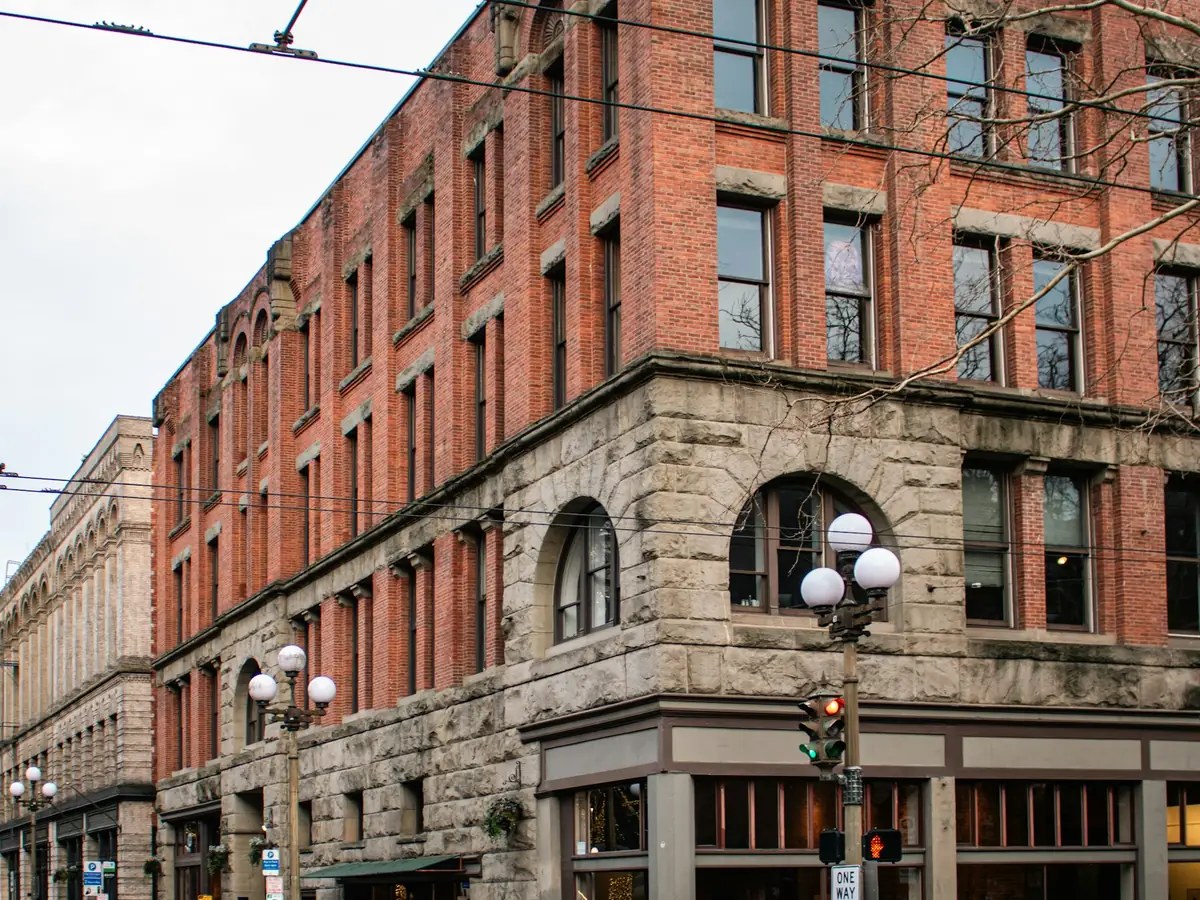
Mixed-use sits between two rulebooks. Residential lenders won't touch the shops; commercial lenders discount the apartments — and one measurement decides which world your building lives in: keep the non-residential share within 30% of floor area and lending value and CMHC-insured pricing opens up, cross it and you're priced as retail. Pure retail has its own tension: the lender is really underwriting your leases, not your building. Our job is to measure first, package the rent roll properly, and put the file in front of the lender whose rulebook it actually fits.

From corner building to retail plaza.
The classic: shops at grade, apartments above. The workhorse asset of every BC and Alberta downtown.
Multi-tenant convenience and neighbourhood strips — anchored or unanchored.
Free-standing stores and pad sites where one lease carries the building.
Individual commercial strata units — owned to occupy or to lease out.
Food-service and personal-service premises, owner-run or tenanted.
Buying the storefront your own business trades from — underwritten on the business plus the property.
Repricing a maturing loan or pulling equity out of a stabilized building for the next move.
Vacancy lease-up, renovation, or tenant turnover funded short-term, then refinanced at stabilization.
The whole financing package, not just the building.
When a business buying its own storefront buys its premises, the mortgage is one piece. We read the financials first, and more often than not the operating line is too small for the business, the credit cards are too small for the month, the purchase comes with leasehold improvements nobody has planned to fund, the equipment sits on a handful of loans at a handful of rates, and there is a tax balance or a supplier that has waited too long. All of it, and whatever else the statements show, is arranged as one package with one set of approvals, so the day the business owns the storefront or the building it is not starved of working capital.
The anchor: the storefront or the building, underwritten on the business that will run from it, with the lender lanes compared below.
Reading the financials usually shows the line of credit was sized years ago for a smaller company. It is resized in the same package: arranged with the lender financing the building, or kept where it is and raised where that bank will do it.
Fuel, parts, travel and suppliers run on cards, and an operating card that maxes out every month is a cash-flow problem dressed as a convenience. Limits are set to the business, not to a branch default.
The storefront fit-out, the kitchen, the counters and displays, the signage and the suite upstairs: the work that turns leased space into yours. Funded as a leasehold-improvement loan beside the mortgage instead of out of the company's cash, so the purchase does not drain the money the business needs to operate.
The kitchen line, the coolers, the display cases and the delivery van. New equipment is financed alongside the building through our equipment-finance partners, and the down payment on it often comes out of the real estate.
We go through every loan, lease and card the business already pays: the old equipment loans, the vendor financing, the line opened in a tight year. Where consolidating them into the package lowers the monthly outlay, it is done at the same time, and the cash flow that frees is often the biggest saving in the whole file.
A CRA balance that fell behind, GST or payroll remittances in arrears, suppliers waiting on aged invoices: where the financials show them, they can be paid out from the package so the slate is clean on funding day.
That is the usual list, not the whole one. Whatever else the financial statements show that is costing the business cash flow it does not need to spend goes on the table in the same read.
Seen on a real file: a childcare operator opening its third centre, where the branch offered a $2,000 card increase and the same bank's commercial division approved roughly $1.1 million. Read the case study →
Three ways to fund mixed-use & retail.
The right lane depends on the residential split, the leases, and the timeline. We size every file against all three before recommending one.
The default lane for this asset class. Lenders underwrite the leases as hard as the building — term, covenant, and renewal options on the commercial units drive the credit decision.
The 30% line is the most valuable measurement in mixed-use: on the right side of it, your corner building with six suites over two shops is priced like an apartment building, not like retail. We measure before we place.
Buys the time a retail asset often needs: fill the vacancy, season the leases, then refinance to conventional — the window is usually 12–24 months of trailing performance.
Rates, ratios, and leverage are typical ranges for illustration — last reviewed July 2026 — and depend on the asset, the leases, the sponsor, and market conditions. Run the numbers with our commercial mortgage payment calculator and cap rate calculator, then we confirm your file's numbers in writing.
Case Studies — files like this
Anonymized case studies from our files. Names and identifying details removed.
Common mixed-use financing questions.
How do I finance a building with apartments above a shop?+
That's a mixed-use mortgage, and the split between residential and commercial space decides everything. If the non-residential portion stays within 30% of both floor area and lending value, the building can qualify for CMHC-insured multi-unit financing at meaningfully better leverage and pricing. Beyond that line, it's placed as conventional commercial — still very financeable, just priced as retail.
How much down payment do I need for a retail or mixed-use property?+
Conventional lenders typically advance up to 65% of value on investment retail and mixed-use — so plan on roughly 35% down. Owner-occupied premises can reach about 75% financing. Residential-majority mixed-use that clears CMHC's 30% test can go substantially higher under insured multi-unit programs.
What matters more to the lender — the building or the tenants?+
The leases. Two identical buildings can price very differently based on who's paying rent: lease term remaining versus the mortgage term, tenant covenant strength, renewal options, and how much income sits with a single tenant. A building full of month-to-month tenants reads as vacancy risk, however full it looks.
Can I buy the storefront my own business operates from?+
Yes — as an owner-occupied commercial mortgage, typically when your business occupies the majority of the space. The lender blends your business's cash flow with any other tenant income, and leverage usually runs stronger than pure investment retail.
See it on a real file: Food Business Buys Its Own Building →
Why do lenders ask about former dry cleaners and auto shops?+
Environmental risk. Retail sites with historic dry-cleaning, automotive, or fuel uses commonly trigger a Phase II environmental investigation on top of the standard Phase I, and unresolved contamination can stall any lender. We pull the property's use history early, because environmental findings — not the mortgage approval — usually set the closing timeline.
How does a strata commercial unit differ from a whole building?+
Strata storefronts are financed like commercial condos: the lender reviews the strata corporation's finances, bylaws, and any restrictions on use alongside your own covenant. Leverage tends to sit at the conservative end of the retail range, and lender appetite varies more than for freehold — one more reason the file benefits from being shopped.
What happens if the building has vacancy right now?+
Conventional lenders underwrite in-place income, so meaningful vacancy usually means a smaller loan — or a decline. The standard play is a private or short-term bridge against the property's value while you lease up, then a refinance into conventional pricing once the rent roll has 12–24 months of trailing performance.
How long does a mixed-use or retail mortgage take to close?+
Plan on 45–75 days for a conventional file — appraisal, environmental, and lease review set the pace — and 10–25 days for a private bridge with an appraisal in hand.
Financing a retail property? Have these ready.
On this asset class the leases are the collateral — a clean lease package moves the file faster than anything else.
- Commercial leases in full — terms, renewal options, and any demolition or early-termination clauses
- Residential rent roll (for mixed-use), kept separate from the commercial leases
- Tenant mix schedule — who pays what, lease expiry dates, and any anchor tenants
- Operating statements for the property, last 2 years, with CAM / triple-net recoveries broken out
- T1s/T2s and Notices of Assessment for all sponsors
- Personal net-worth statement per sponsor
- Environmental Phase I — prior dry-cleaning, automotive, or fuel uses on retail sites are common triggers
- Zoning confirmation that current uses are permitted
- Purchase contract or existing mortgage payout statement
Have a property in mind? Score it first.
Tell us about the building and the leases — and whether the residential share might clear CMHC's 30% line — and we'll tell you which lane fits before you spend a dollar on reports.